
Introduction to the World Wide Area Network.
Wide Area Network (WAN) is a telecommunication network which serves a large geographical location- cities, countries and even continents. WANs, unlike Local Area World Wide Area Network, are not restricted to a home, office, or campus but instead, they are used to connect many smaller World Wide Area Network across long distances. The most familiar implementation of a WAN is the Internet which allows communication and data exchange in the world. Some of the transmission technologies adopted by WANs include leased lines, satellite links, fiber-optic cables and wireless connections. They enable organizations to share resources, have centralized systems and communicate effectively in the distributed locations. With increased globalization of businesses, WANs are changing to provide higher data rates, increased security and scale.
The 5G Technology and its Capabilities.
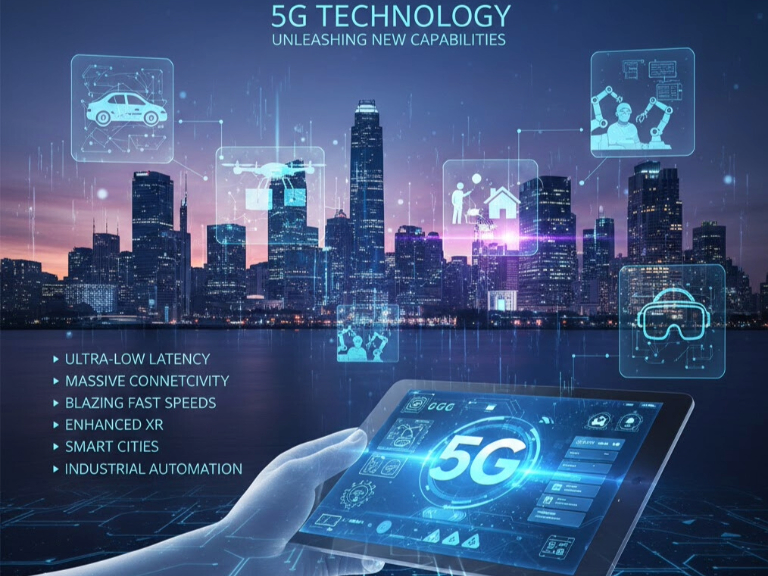
The fifth generation mobile World Wide Area Network technology is 5G, which is designed to be faster, has less latency and is capable of connecting devices more than the older generations. It offers a number of times higher data rates than 4G, latencies of one milliseconds, and the capacity to support millions of devices within one square kilometer. The following characteristics make 5G a key enabler of next generation digital services and reflect major trends in technology togtechify across modern communication systems . In contrast to previous World Wide Area Network, 5G can be used to provide a plethora of applications, including enhanced mobile broadband, as well as ultra-reliable low-latency communications. This is because of its versatility and ability to partner with edge computing architectures that require high-performance and frequent connectivity | World Wide Area Network
The Closer Intelligence to Data Edge Computing.
Edge computing shifts the data processing infrastructure to areas close to the data-generating source sensors, devices and local servers. This change shortens the latency, decreases the bandwidth usage and enhances the reliability through real-time processing. Applications that demand instant responses, e.g. industrial automation, real-time analytics, are particularly useful with edge computing. Local processing of data also enhances privacy and reduces reliance on distant cloud infrastructure by the organization. The edge computing offers a scalable solution to centralized cloud systems as data volumes increase complementary to the latter instead of alternative | World Wide Area Network
The importance of integrating 5G and Edge Computing.
Edge computing is indeed a brilliant concept used with 5G connectivity. Edge minimizes processing delays, and 5G provides fast and reliable data transfer among devices as well as between devices and edge nodes and the cloud. This collaboration allows the free flow of data and highly responsive applications. Real-time video analytics, connected cars and immersive virtual worlds are some of the examples, all of which require low latency and high bandwidth. The lack of 5G may create bottlenecks of edge systems. The combination of them gives rise to a distributed, but unified computing environment that can scale the future digital ecosystems.
Ultra-Low Latency as a Future-Defining Trend.
Ultra-low latency is one of the most important future trends of the 5g network deployment. Since applications are becoming increasingly interactive and time-bound, even the slightest delays would worsen performance or create safety hazards. The instantaneity in decision-making made available by ultra-low latency is important in autonomous driving, remote surgery and industrial robotics. Edge processes work on a local basis, whereas 5G maintains transmission delay to a minimum. This tendency will lead to the hardware, software, and World Wide Area Network design innovations, which will push the systems into the real-time mode of work and reform the user expectations in industries | World Wide Area Network
Customized Service Delivery and Network Slicing.
Wide Area Network slicing, which is one of the advanced features of 5G, enables the use of common physical infrastructure by multiple virtual networks. The slices can be optimized to meet the desired performance characteristics: bandwidth, latency or reliability. In combination with edge computing, slicing provides highly customized services. An example is a factory could use a slice that is optimized in such a way that it ensures reliability and low latency but consumer applications could use a different slice that is focused on high data throughput. This is helpful in scaling since the capacity dynamically allocates resources depending on their demand and priority of use.
Edge Artificial Intelligence and Intelligent Automation.
The 5G-edge integration in the future will see the application of artificial intelligence even more on the edge. Edge AI processes and manipulates data at the edge to minimize the latency and allows real-time autonomous decisions to be made. These are predictive maintenance at factories, facial recognition at security systems, and adaptive traffic control at smart cities. The AI-based systems can achieve scalability with the highest performance maintenance with high-speed data exchange over 5G and local processing through edge computing. The trend boosts the generation of smart self-optimizing applications | World Wide Area Network
5G Networks and Enterprise Adoption.
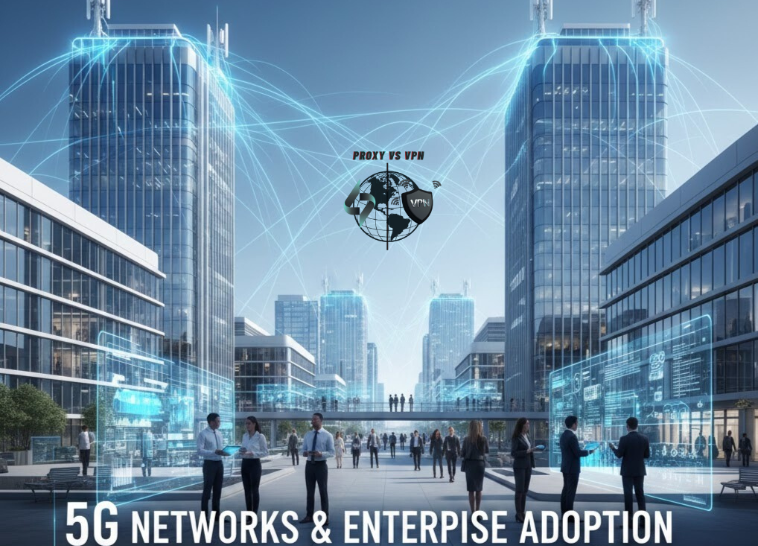
Businesses are swiftly shifting to their individual 5Gs networks in attempts to obtain a closer insight into the management of performance, security and data collections. Contrary to the public Wide Area Network, the private 5G allows organizations to customize parameters to suit their operations. Connected to edge computing, the mission-critical applications within the factories, ports, and hospitals are enabled with the help of the private 5G networks. The trend allows businesses to expand the infrastructure in a progressive manner with the increase in demand. With the price drop and the maturity of the standards, private 5G and edge computing will become the major pillars of corporate digital transformation strategies | World Wide Area Network
Scalability over Distributed Edge Architectures.
The 5G-edge integration can be considered scalable based on distributed architectures. Computing power is distributed across numerous edge locations, rather than being concentrated in a single location in the form of a data center. This method enables a horizontal scaling- the introduction of new edge nodes when the demand increases. Together with the extensive coverage of 5G, they contribute to the scalable implementation in a wide range of geographic areas. With the increasing complexity and reach of applications, distributed edge architectures will be required to provide uniform performance and use resources resourcefully | Tamilyogi VPN
Cloud Native Technologies Enabiling Scalability
Scaling integrated 5G and edge systems require the use of cloud-native technologies which include containers, micro-services and orchestration platforms. They enable applications to be uniformly deployed in a variety of settings, both in centralized clouds and edge nodes. Orchestration platforms automate the distribution of workloads and updates of workloads, as well as allocation of resources, which make operations go more complex. Such scalability allows scalability in real time on-demand. Organizations are now able to operate large edge deployments more effectively using these principles of cloud-native, without sacrificing the reliability or maintainability of scalability | World Wide Area Network
Industry Use Cases Driving Large Scale Adoption
There are several industries that support the mass implementation of integrated 5G and edge computing. Connected and autonomous vehicles in transport require fast and real-time communication and on-board processing to keep their safety and efficiency. Smart factories employ edge-enabled 5G networks in robotics, predictive maintenance and quality control in the manufacturing industry. Some healthcare applications are remote patient monitoring and real time diagnostics. Cities which are smart use these technologies to manage their traffic, optimise their energy use and secure their people. The above diverse applications indicate the scalability and multipurpose of edge integration in 5G in sectors | World Wide Area Network
Security And Privacy Challenges in Distributed System
Although this has benefits, implementation of 5G and edge computing presents a big security and privacy concern. The use of distributed edge nodes increases the attack surface, which exposes systems to cyber attacks. The security policies, encryptions, and access controls in many places are not easy to enforce. When dealing with sensitive information, then data privacy is also a concern when it is processed at the edge. These troubles can only be resolved through effective security systems, automated surveillance, and adherence to regulatory provisions. With the increase in deployments, security and privacy will be crucial to being trusted and reliable | World Wide Area Network
Operational And Management Complexity
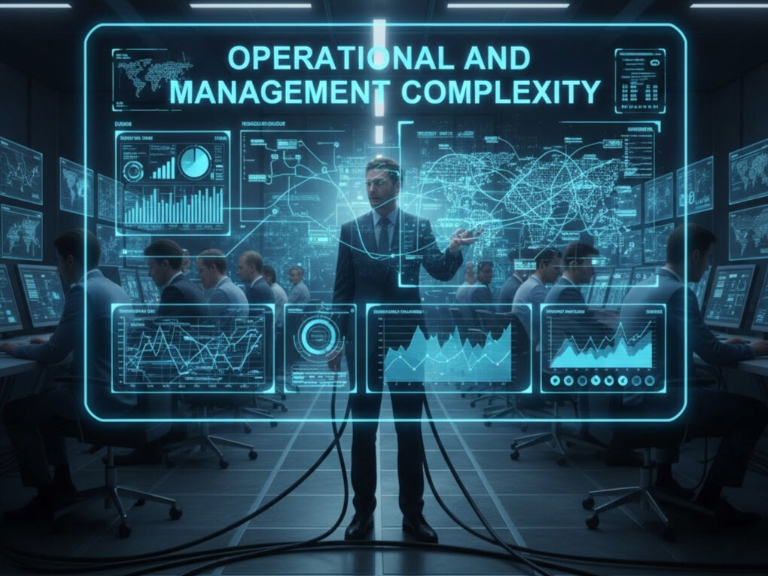
The operational challenge is that it is difficult to manage many distributed edge nodes related to 5G networks. The performance monitoring, deployment updates, and failure processing are complicated at a larger scale. The process of management manually is not feasible and thus use of sophisticated automation and smart tools is needed. AI-based monitoring and predictive maintenance help optimize downtime and overall performance while supporting technology expenses management by reducing unnecessary resource usage. With the increase in size of systems, good management can guarantee easy operation and cost-efficiency. Resolving the complexity of operation is the challenge to long-term adoption of 5G-edges | World Wide Area Network
Look Beyond 5G :Preparing For Future Network
Although currently 5G is being deployed globally, studies on future wireless technologies are being done. Such World Wide Area Network will provide greater speed, reduced latency and more edge integration. To make this evolution, scalable, flexible architectures that can match new standards are required. The 5G-edge integration lessons will be used to design future networks. The scalability in the long-term is based on the modular and interoperable systems that can be adjusted with the development of the technology.
Conclusion
The combination of 5G and edge computing revolutionizes contemporary World Wide Area Network and computing. High speed connectivity plus local processing will allow real time applications, efficient utilization of resources and scaling infrastructure. Its further development will be influenced by such trends as ultra-low latency, edge AI, private 5G, and cloud-native architectures. Security, management, and cost issues may continue to be a problem, but future projections are bright due to continuous innovation and implementation. Finally, intelligent and resilient connected digital ecosystems will be anchored on scalable 5G-edge integration.
Frequently 10 Question and Answers
Q#1: How can 5G and edge computing be integrated?
Answer:
Combining the 5G and edge computing, the technology provides the ultra-high-speed wireless connection with local data processing at the source. It also reduces latency and is more responsive in real-time and can also scale to support autonomous vehicles, smart factories, and real-time analytics.
Q#2: What is the significance of 5G to edge computing?
Answer:
The 5G plays a vital role in edge computing in that it provides high bandwidth, ultra-low latency, and dependable connections. Those features allow edge nodes to communicate effectively with devices and cloud services and prevent any bottlenecks, allowing processing of data in real-time.
Q#3: What is the performance of 5G and edge computing in improving the performance of WANs?
Answer:
The performance of WAN is enhanced with 5G and edge computing as they relocate computing resources to the users and devices. It minimises long-range data transport, decreases latency and augments dependability and provides scalable communications over large regions.
Q#4: Which are the future trends of 5G and integration of edge computing?
Answer:
Some of the trends that are going to happen in the future are ultra-low latency applications, World Wide Area Network slicing, edge AI, private 5G network, cloud-native architecture, and distributed edge infrastructure that supports large-scale, real-time digital ecosystems.
Q#5: How is ultra-low latency useful in 5G-edge systems?
Answer:
Ultra-low latency enables real-time data processing and decision-making, which is required in autonomous vehicles, remote surgery, and robotics in the industry. Edge computing processes and processes data on-site, whereas 5G transmits and transfers data as fast as possible.
Q#6: What is the role of network slicing in enhancing network scalability in 5G networks?
Answer:
World Wide Area Network slicing enables multiple virtual networks to be deployed on the same physical infrastructure, that is optimised to their unique requirements, such as latency, bandwidth or reliability. This is an elastic allocation of resources depending on the needs of the applications.
Q#7: What is edge AI and what is its significance in 5G networks?
Answer:
Edge AI refers to the execution of AI codes on the edge nodes rather than the centralised clouds. It provides real-time decision-making, reduces latency, and enables scalable smart city intelligent automation, predictive maintenance, and security | Kellogg Innovation Network
Q#8: What are the current applications of 5G and edge computing by industries?
Answer:
Planners of smart cities, manufacturing, healthcare, transportation, and robotics use 5G and edge computing to accelerate large-scale implementation of robotics, real-time diagnostics, autonomous vehicles, traffic management, and energy optimization | World Wide Area Network
Q#9: What are the security issues of 5G and edge computing?
Answer:
The security issues include the increased attack surfaces due to distributed edge nodes, the challenge to enforce homogenous policies, and the concern of privacy of data. Mitigation necessitates a strong encryption, an access control, automated monitoring and compliance with regulations | World Wide Area Network
Q#10: What are the ways that cloud-native technology can facilitate scalability in 5G-edge systems?
Answer:
Containers, microservices and orchestration Cloud-native tools allow the deployment of flexibility and auto-scale both in the cloud and on the edge. They are able to handle complexity, enhance reliability, and optimise resources in real-time | World Wide Area Network






Leave a Reply